Guide
Top KPIs for Your Heavy Equipment Dealership
Get better insight into your heavy equipment company more than ever before. Learn the top KPIs, see effective dashboards, and get important BI advice.
Business intelligence (BI) for heavy equipment uses reports, dashboards, and analytics to give dealerships access to their data and help teams make decisions with highly accurate data.

Data is exploding in the heavy equipment industry, and dealerships are exploring new ways to optimize their business and keep up with the times. To inform business strategies and streamline operations, decision-makers need access to digestible, high-value data insights.
In this guide, we'll explore the role of BI and analytics in heavy equipment, including how dealers can use reports and dashboards in rental, sales, service, and more to make informed decisions and boost efficiency across departments.
Business intelligence is a form of data management that enables organizations to collect, analyze, and draw insights from various types of information.
Typically paired with analytics and implemented through software tools, BI makes internal and external data more accessible and digestible than it typically is in its raw form.
Organizations develop internal BI practices to implement scalable processes and guidelines around data management and analysis across teams and departments. Then, they use the resulting insights to:
Data is exploding in the heavy equipment industry, and dealerships are exploring new ways to optimize their business and keep up with the times. To inform business strategies and solve problems efficiently, decision makers need access to digestible, high-value data insights.
Unfortunately, many heavy equipment dealerships lean on outdated legacy systems and manual tasks to evaluate their performance or build data-based reports. Some may even base decisions on incomplete data or disregard quantitative insights altogether and take their best guess at identifying new initiatives.
Data-driven companies are 58% more likely to exceed their revenue goals than their non-data-driven peers. Business intelligence and analytics empower even the least tech-savvy of heavy equipment dealers to leverage data in new ways. They pave the way for modernization and data-driven decision-making by helping dealerships connect to their data sources, automate reporting and analysis, and improve data visibility across the board.
The end result? Dealers can extract the highest potential value from the data within their existing tools and systems — including ERP, DMS, and payroll systems — and use it to inform the future of their operations.
According to a recent McKinsey & Company survey, managers spend nearly half of their time making decisions.
To make effective decisions, dealership managers need visibility into the performance of each department, even when they don’t have the bandwidth to stay involved in day-to-day operations. And if they manage multiple locations, they need the ability to quickly assess trends in performance, profitability, and customer sentiment across their entire dealer network.
Beyond direct access to the multitude of data sources that impact their operations, managers need a quick and easy way to put all of these high-value insights into the hands of themselves and their end-users.
For example, rental department managers should know how long it takes for a piece of equipment to come off rent and become available again. Finance teams need to measure the rental revenue and know how much more revenue is generated over a month, quarter, and year.
Let’s take a quick look at some of the high-level benefits a well-implemented BI practice offers to heavy equipment dealers:
In short, business intelligence connects the dots between raw data and actionable insights, using powerful reports and dashboards. Dealers can use these tools to extract more value from business data, improve operations, and find ways to serve their customers better.
How Bl and Analytics Can Help Dealerships Unlock Opportunities
The value of a dealership’s data doesn’t lie solely in the information itself but rather in how it’s leveraged across operations. BI and analytics solutions are an integral part of using that data effectively.
Consider the expansive libraries of manufacturing, dealer, customer, machine, parts, repair, marketing, and other data types within an organization. It likely exists in various locations, in multiple formats, and with varying complexity.
When dealers use BI to transform raw data into cohesive insights, they realize higher margins, more sales, and improved equipment utilization.
^ Back to Top
Dealers' Challenges | What Dealers Need |
| Built-in DMS reporting is limited and doesn't align with business needs | Fully customized/tailored BI and reporting solution built for their specific DMS and operational needs |
| Tedious, manual reporting workflows | Automated reports that reflect custom business logic and data from every source system |
| Disconnected data sources and multiple versions of the truth | Comprehensive data repository that everyone can access and align behind |
| Managers can't easily access relevant data and KPIs | Tailored BI dashboards by role, department, and location |
| Reports are maintained by one person with deep institutional knowledge | Intuitive, accessible solution and standardized reporting for the entire organization |
| It's challenging to maintain multiple sets of custom inputs and data logic across systems | Custom business logic / KPIs built into a single workflow that's consistently applied to all data |
Dealerships generate and interact with a high volume of data every day. However, many rely on manual processes to turn complex data into reports — on service utilization, sales, market trends, and more. Without BI, dealers rely on Excel-based reports that take days or even weeks to produce and often don’t provide decision-makers with the complete picture.
BI enables dealers to streamline reporting and data analysis through reliable tools and repeatable processes that save teams time and effort while also improving the quality of reports across the board.
Security and access controls are a central element of data management, especially when operations span multiple dealership locations.
BI solutions help dealers deliver the right insights to the right people and ensure the data moving in and out of backend systems doesn’t fall into the wrong hands. A BI tool will give teams the ability to quickly and securely manage permissions while always-on backend features protect data from potential breaches or governance errors.
An effective BI strategy requires user adoption across departments and dealership locations. The BI and analytics tools a dealership uses will play an integral role in breaking down internal silos and enabling teams to innovate faster than ever before.
BI allows dealerships to integrate multiple systems and data sources, paving the way for cross-functional teams to work together. It also provides everyone with a single source of truth and promotes efficient data sharing at your dealership, even if that data spans multiple locations.
Most dealerships operate out of several software tools simultaneously, which means they’re managing data across multiple interfaces and systems. In legacy systems, this may require analysts to manually export data from three or four places to compile a single report, which means more tedious work for them and delays in report generation.
BI and analytics tools offer integrations so dealerships can house all of their data under one roof. That way, it’s even easier to share reports, status updates, and other essential information across teams, to headquarters, and with other locations.
While BI plays a crucial role in day-to-day dealership operations and efficiency, it can also help dealerships increase sales, improve operational efficiency, and create new revenue streams.
“The average dealer … only knows 40 percent of its opportunity.”
— Stu Levenick, former Group President of Dealer Relations for Caterpillar
BI systems give leadership teams a comprehensive understanding of company performance and industry trends. Together, they can use this information to optimize dealership performance at various levels — improving processes, analyzing market share data, analyzing consumers' buying habits, developing new service packages, etc.
Dealerships that implement BI successfully can use the resulting insights to inform internal improvements, respond to evolving consumer demands, and stay one step ahead of their competitors.
As a dealership grows, so will the tools dealers use to manage their operations, enable their employees, and measure success. The good news is, an effective BI and analytics tool goes beyond day-to-day reporting and analysis. It supports dealership operations even as priorities change and internal needs evolve.
BI and analytics tools lend themselves to customization and have the capabilities required to scale initiatives up or down as needed. You can add new integrations or adjust reports as your dealership's BI maturity increases and your business needs evolve.
^ Back to Top
Use Data to Develop Scalable Business Strategies
A business intelligence (BI) platform combines a range of essential BI and analytics capabilities into a single, end-to-end solution. In short, these platforms enable data retrieval, analysis, configuration, and reporting, among other more specialized features like embedded analytics, self-service BI, and more.
Business intelligence platforms for heavy equipment dealerships go beyond generic BI and analytics functions to ensure compatibility with dealers’ existing systems and common operational challenges.
Business intelligence and analytics practices can benefit dealerships in more ways than one. But before you begin researching solutions or pitching a BI investment to your stakeholders, you’ll want to assess how you’re currently monitoring and measuring your equipment dealership.
If you find that your essential business decisions always involve a little bit of guesswork, it’s likely time to rethink how you leverage your dealership’s data and reporting tools.
At a high-level, good candidates for BI include:
Several factors can signify a company is ready to take the plunge into purchasing a business intelligence and analytics solution. Here are a few to keep in mind as you assess your dealership operations:
If you’re like most dealers, your dealership relies on multiple software tools to manage in-house operations, external partnerships, and customer relationships.
Even if several of your tools have their own reporting feature or analytics capabilities,bringing all of these data sources together under one roof can be challenging.
If your teams spend hours manually aggregating data and reconciling inconsistencies across systems, a BI solution can help. Not only does BI simplify multi-source reporting and analysis, but it also ensures you don’t miss out on compelling insights and the opportunity to evaluate trends across multiple data systems.
If you’re still pulling reports manually, you know the many steps involved in getting an accurate representation of your company data. Analysts spend hours extracting data, manually manipulating it based on reporting needs, and validating it to ensure reports reflect the correct information.
Not only does this approach put a heavy burden on your teams, but it also creates detrimental delays that leave decision-makers without the data they need to make critical time-sensitive decisions. If reports take several days to generate, they’ll be outdated by the time they make it to their target audience, and the process must begin again.
BI allows dealers to put the task of data extraction and processing on technology. A robust analytics solution can create reports in as little as one click and a few seconds and give dealers the peace of mind that the data within each report is accurate, up-to-date, and error-free.
KPIs quite literally define success for your dealership operations, which means your teams need a scalable way to monitor and measure against them. But just as reporting delays leave blind spots in daily decision-making, they also make it challenging to keep a steady eye on KPIs across teams and departments.
If your leadership teams have a vague idea of how teams are tracking toward specific goals, it’s likely time to invest in a BI solution that will drastically increase visibility and pave the way for performance improvements.
Explore the Most Important KPIs for Heavy Equipment Dealerships
BI gives teams the tools they need to monitor and record progress toward dealership KPIs and other goals by increasing visibility into system and employee performance. With a comprehensive view of performance data, you can better relay progress to your stakeholders and implement improvements across your dealership.
Poor cross-team alignment is one of the most notable signs that it's time to consider BI for your heavy equipment dealership. No matter how diligent your analysts and controllers are about data management, operating from disparate systems leaves your dealership at risk of data errors, miscommunication, and misalignment between teams.
For example, if your Finance team pulls a report directly from the General Ledger at the end of Q2, but your Sales team is still referencing numbers from a manually created spreadsheet, they risk acting on an inaccurate source of “truth” since it’s the only one they have access to. In short, dealerships without a single source of truth (SSOT) often make decisions based on incomplete, incorrect, or outdated information.
The good news is, BI tools can bring all of your dealership’s data under one roof through unified, easy-to-use dashboards that update in real time. Aggregation features unify every piece of data in your organization, such as payroll, weather, website, and social media data, in one view. Integrations are also critical here, as they enable your BI and analytics tool to collect, track, and report on data from other sources.
Download our BI Buyer's Guide to Learn What to Look for in a BI solution
TARGIT leverages decades of experience in BI and heavy equipment to provide dealers with intuitive solutions that support their unique needs. We’ve led over 60 dealership BI implementations in the last three years. We connect with leaders in the heavy equipment space through our involvement in the Associated Equipment Distributors (AED) association.
Our end-to-end BI and analytics platform, TARGIT Decision Suite, combines robust back-end data modeling with a user-friendly front-end built for Heavy Equipment dealerships. With TARGIT, dealerships can unify data sources, create custom dashboards, and automate complex reporting workflows to turn dense data tables into digestible reports that inform decision-making and give your teams unparalleled visibility into dealership performance.
How Our Solutions Help Heavy Equipment Dealers Unlock Growth Opportunities
TARGIT puts the unique needs of dealerships in the forefront, providing your teams with comprehensive insight into every aspect of your fleet, KPIs, and internal operations with leading capabilities, including:
TARGIT gives you access to all your enterprise data in one single, user-friendly platform. From raw DMS data to decision-leading insights, TARGIT will be your organization’s key platform for streamlining analytics.
Heavy equipment dealerships use TARGIT Decision Suite to monitor important metrics in every department. Not only can dealers use BI and analytics to measure performance, but they can also use high-level findings and historical trends to improve it.
TARGIT includes pre-configured reporting structures built to drive value for your dealership by unlocking insights in the following areas:
Since each department can configure reports and dashboards around their specific needs and goals, dealerships can monitor Service, Sales, Finance, etc., with a few clicks of their mouse. Then, they can use those reports to inform future improvements or uncover hidden inefficiencies within their operations.
Develop batch reports based on what’s most important to your dealership, then automate report creation and scheduling to uncover the latest insights in a snap.
TARGIT Decision Suite fully automates standard reporting functions, turning an arduous process into one that’s completed in a matter of minutes. Users can share reports across departments or with leadership in just a few clicks or schedule routine reporting daily, weekly, or quarterly to ensure everyone’s always working for the latest information.
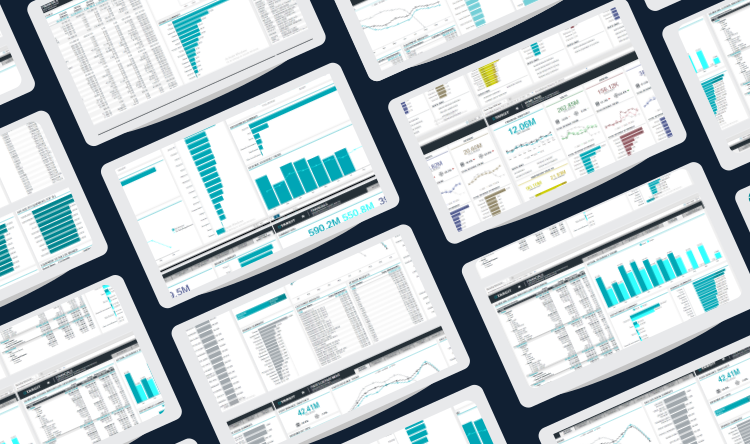
Create intuitive dashboards that even the most non-technical employees can easily customize or update in seconds. TARGIT helps dealers provide their employees with digestible dashboards that present relevant, up-to-date insights in minutes.
With TARGIT’s embedded analytics solutions, users can access those dashboards directly from the tools they already use—right in their email or on-screen in the office. Our user-focused features give teams access to data and reporting information from Windows, web, or mobile devices in just a few clicks.
Keep your operations aligned without a heavy technical lift of complicated data collection processes.
Connect disparate data sources and legacy management systems through TARGIT InMemory to create a comprehensive view of your dealership’s data. Then, leverage dashboards and reports in TARGIT Decision Suite to share high-value insights with everyone on your team.
Integrate data from external tables and warehouses directly into TARGIT Decision Suite for fast analyses.
TARGIT’s backend system pulls data from your dealership’s existing sources — like a DMS, ERP, or CMS platform — into our InMemory database, where daily data refreshes and ETL scripts ensure accuracy and consistency across the board.
From there, your dealership can build dimensional data models for each department or focus area and view dynamic visualizations and reports directly from TARGIT dashboards.
User adoption is critical in helping your business become more data-driven. However, most legacy BI platforms are technically complex and challenging to use.
TARGIT Decision Suite was developed with your dealership’s end-users in mind. While its back-end capabilities are endlessly customizable, front-end tools and interfaces are easy to learn and implement into daily operations, even for non-technical users.
Your BI platform shouldn’t just meet the needs of your current operations; it must support the future growth of your dealership. Unlike some analytics tools that stagnate over time, TARGIT Decision Suite prioritizes scalability at every turn.
TARGIT makes it easy to add new data sources, integrations, and reporting structures to your BI practice. Plus, we’re continuously exploring new capabilities and rolling new releases out to our customers to ensure their software always supports their operational needs.
Manage data access and security tools to improve data governance.
TARGIT combines the control of a centralized BI solution with the flexibility of a decentralized solution, providing your dealership with robust security features and dependability. With TARGIT, dealers can configure security features for:
Use TARGIT’s security management portal to customize the individual user experience and control who has access to data within your BI systems. TARGIT makes it easy to restrict users from accessing a particular area – for example, payroll data – while still enabling them to drill down into detail behind the dashboards and analyses they have access to.
Along with offering user-friendly toolsets, your dealership’s BI platform should make it easy for employees to access and use data how and when they need it. TARGIT Decision Suite prioritizes data democratization with self-service tools like guided analytics and data discovery features that help users implement BI and analytics into their day-to-day tasks.
Self-service BI improves user adoption and breaks down the invisible wall between your dealership’s data analysts and the rest of your organization, extending the power of data-driven insights to every level of your operations.
Navigate BI implementation and realize ROI from day one with support from TARGIT’s dedicated team.
With decades of experience, many implementations under our belts, and excellent success rates, we know the best practices to carry out a successful implementation. Our teams can manage implementation, testing, user training, and more to ensure your new BI solution works with your teams, not against them.
We’re with you every step of the way to ensure 100% satisfaction and high user adoption. We’ll partner with you to create a custom project plan that will set your dealership up for success.
“As service managers, it’s easy to get caught up in the details of selling, managing technicians, and driving business. The TARGIT dashboards allow us to focus on the most important numbers behind our operations and monitor them efficiently on a daily basis."
— Billy Igo, Vice President, Doggett – Toyota
Doggett Equipment Services Group
"Our business has grown a ton and been more profitable in the past several years than ever before. TARGIT has been beneficial in showing us how we need to tweak our business to get the growth we are striving for."
— Andrew Distler, Customer Equipment Solutions Manager
Holt of California
Read and watch dealership customer stories here
We leveraged decades of heavy equipment experience to combine the power of TARGIT with the systems dealers rely on to run their businesses.
We offer business intelligence accelerators (BIAs) for various DMSs, each with a pre-built, custom infrastructure, out-of-the-box reporting features, and robust analytics dashboards that update in real time:
Dealers can use these BIAs to connect TARGIT to their DMS quickly and easily. Our approach eliminates months of setup time and hours of manual tasks with pre-built reports that measure:
TARGIT’s accelerators seamlessly integrate data from your DMS tables warehouse directly into TARGIT Decision Suite for instant analyses. Access a recommended set of standard tables out-of-the-box, then add custom tables and integrate additional data sources as your BI operations grow.
Product Brochure: TARGIT's Accelerator for IntelliDealer
Product Brochure: TARGIT's Accelerator for DIS

GET READY
Discover how TARGIT’s BI and analytics platform for heavy equipment dealers can help you gain complete insight into every aspect of your dealership, deliver exceptional customer experiences, and improve performance company-wide.