


The MS Fabric Frenzy and Why It Matters Now
Microsoft Fabric is an end‑to‑end analytics SaaS platform that unifies data engineering, warehousing, analytics, and data science. It’s built around the OneLake data lake and designed to help enterprise organizations break down data silos, unify multiple data services, and simplify reporting and analytics.
The Benefits of Microsoft Fabric
- All data workflows are managed in one environment within the Microsoft ecosystem.
- Copilot’s AI capabilities aid in report building and data analysis.
- Centralized data storage in OneLake eliminates duplicate datasets and conflicting versions of information.
Fabric integrates natively with Microsoft 365 to promote one single data foundation and a cohesive experience across the Microsoft ecosystem. It’s a gamechanger for companies that rely heavily on the Microsoft product suite.
However, many of these organizations still have unique reporting requirements associated with data sources outside of Microsoft, such as third-party CRM, ERP, DMS, and other systems.
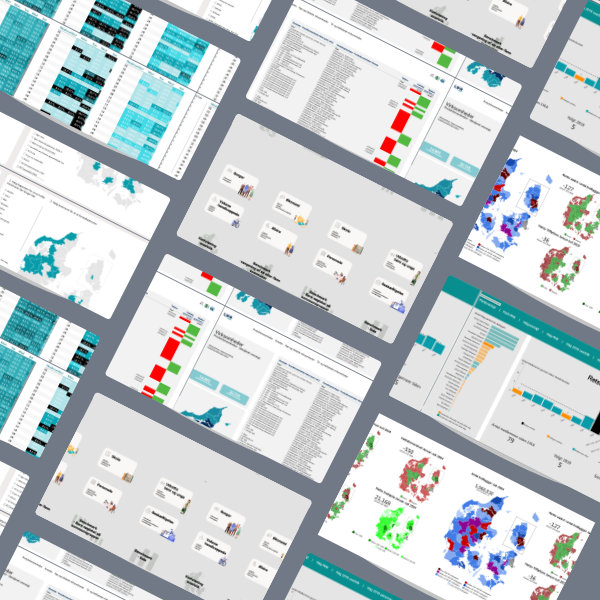
In that case, they can leverage MS Fabric’s advanced analytics tools most effectively by connecting it to specialized business intelligence (BI) solutions. BI platforms like TARGIT Decision Suite offer tailored features, capabilities, and data tables for specific source systems.
By integrating TARGIT and MS Fabric, employees can truly get a complete view of their data without compromising custom data logic, industry-standard reports, and other critical capabilities.
Why Pair Fabric With Best‑of‑Breed BI Tools
Even with its powerful native capabilities, Fabric can't replace every part of a modern analytics stack.
Organizations like heavy equipment dealers and manufacturers still rely on specialized BI platforms for custom visualizations, embedded analytics, multi-source reporting, data modeling, and hybrid BI operations.
In many cases, these teams want to take advantage of Fabric’s data capabilities without disrupting their users’ current BI user experience. Fabric is designed to be part of an open technology ecosystem. Its accessible, lake‑centric design allows for integration and data sharing with other platforms.
Three Ways to Connect TARGIT to Microsoft Fabric
1) Connect TARGIT to a Semantic/Tabular Model in Fabric
A 'Semantic model' in Microsoft Fabric may also be related to names such as 'Vertipaq engine', 'Tabular model', 'DAX' and 'PowerBI data model.'
At a high level, you can connect TARGIT to a Semantic model in Fabric by granting access to an Azure Service Principal application. Then, in the TARGIT Management client, use the provided keys and secrets to connect to the Semantic model.
2) Connect TARGIT to a Fabric SQL Endpoint
You may connect a Microsoft Fabric SQL analytics endpoint to your TARGIT server with an Azure Service Principal application and the correct OLE DB driver 19 for SQL Server.
3) Use Parquet Files to Import and Export Data With TARGIT’s InMemory ETL
Another option is to use Parquet files as data sources in an InMemory ETL project. This process is relatively straightforward and allows you to import data from multiple files. You can also export TARGIT InMemory tables to Parquet files.
The Benefits of Integrating TARGIT and Microsoft Fabric
By integrating MS Fabric and TARGIT, teams can confidently analyze another layer of their operational data within one, user-friendly BI solution that’s already configured to their business needs. Comprehensive data analysis within TARGIT provides:
- Faster reporting without duplicate data exports across systems
- Reduced tech sprawl via automated, multi-source reporting and analysis
- The option to display Fabric data inside other tools, via TARGIT embedding
- Ability to use Fabric’s governance and consistency within a trusted, familiar BI tool
Fabric Is the Future. TARGIT Makes It Even Better.
Many industry pros see Microsoft Fabric as the future of data analysis. However, the organizations leveraging it also want tailored BI experiences that allow end-users to uncover highly relevant information quickly and confidently.
The combined power of TARGIT and Microsoft Fabric gives these teams a modern, secure, and scalable analytics ecosystems that’s fully capable of supporting their specific business needs and data requirements.

/Forterro_Arrow-On-Colour.svg)
