
1. How Does Business Intelligence Work?
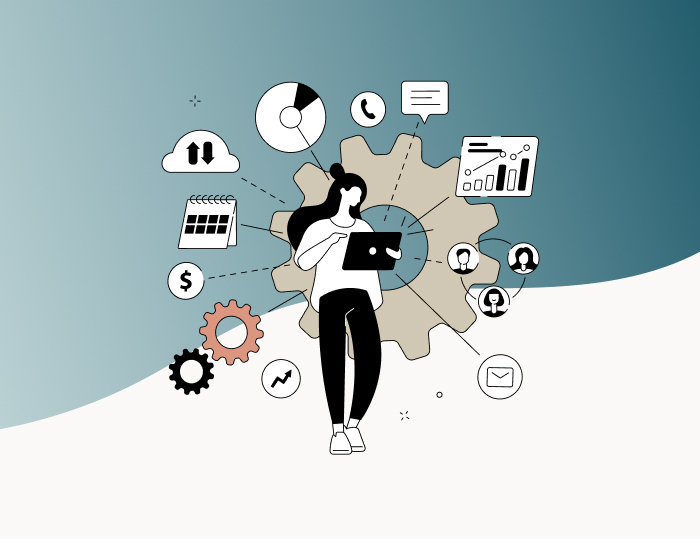
A business intelligence (BI) platform works by collecting data from multiple sources, cleaning and organizing it, and presenting it in a unified, accessible format. These sources may include Enterprise Resource Planning (ERP) systems, Customer Relationship Management (CRM) platforms, Dealer Management Systems (DMS), point-of-sale tools, and third-party applications.
BI tools empower end-users to:
- Analyze performance across teams, locations, or time periods.
- Compare metrics to identify patterns and trends.
- Automate recurring reports and share them with the right people at the right time.
A pre-defined BI strategy and implementation plan is the key to success, as it outlines which numbers are most important to track on a daily basis and what dashboard overviews your business leaders need to do their jobs effectively.
On top of choosing the best-fit BI solution for your industry and organizational structure, you’ll want to take a phased approach to implementation and rollout to promote accuracy from day one.
Help from a dedicated consulting team is invaluable here, as they can translate your data requirements into custom-tailored reports and interactive dashboards. Plus, they’ll work alongside your team over the life of your BI solution, helping you evolve reporting and surface data to meet new business needs or priorities.
Once your new solution is up and running, automated reporting and analysis replaces tedious, error-prone tasks in tools like Excel, and targeted report distribution gives every type of user access to the data most relevant to their role.
The key to ensuring users reference and act upon the insights your BI solution provides? A robust data culture.
Data culture is all about centering your business decisions around accurate, comprehensive data. It impacts how you manage data collection and analysis, encourages cross-functional teams to use data to inform their daily tasks, and enables executives to create data-driven strategies and growth goals.
Establishing a data culture requires that your employees shift their mindset and decision-making processes: replacing gut feelings with decisions based on data. 
The successful adoption of data culture hinges on more than a high-level goal or inspiring mission statement. Instead, it’s rooted in change management at every level of your organization. Data culture isn’t a technology implementation or software solution; it’s a core operating principle.
2. What are the Benefits of Business Intelligence?
Business intelligence offers both strategic and practical advantages. It automates manual reporting, integrates siloed data, and makes reliable insights available to everyone, from executives to frontline staff.
Key benefits of BI include:
- Data Integration: Combine data from ERP, CRM, DMS, and external sources into one clear, accurate overview.
- Automated Reporting: Deliver up-to-date reports straight to inboxes or dashboards – no manual spreadsheets required.
- Advanced Data Analysis: Use predictive modeling, custom filters, and drill-down capabilities to dive deeper into your data.
- KPI Monitoring: Track essential performance metrics through interactive, visual dashboards.
- Data Sharing: Improve users’ access to data without compromising data security or quality.
- Self-Service Analytics: Enable employees to generate their own reports without waiting on IT.
- Data Governance: Ensure secure, compliant data handling, storage, and management across the organization.
- Informed Decision-Making: Empower teams to act quickly and confidently with trustworthy, up-to-date insights.
Exactly how BI benefits your organization will depend on your current processes, team structure, and long-term goals. Let’s dive a bit deeper into some of the benefits you can expect to see with a dedicated BI solution and strategy in place:
Data Integration
Business intelligence gives you the ability to pull together data from within your organization and across external sources. By integrating directly with systems like Enterprise Resource Planning (ERP), Customer Relationship Management (CRM), Dealer Management System (DMS), and more, BI solutions give you a complete, up-to-date picture of your data.
Automated Reporting
BI solutions automatically handle tasks related to data collection, formatting, and analysis so you can get up-to-date reports delivered straight to your email. Plus, BI makes it easy to dynamically distribute these reports to relevant team members or business leaders.
Advanced Data Analysis
BI solutions provide powerful analytics capabilities like data modeling, multi-level drill-downs in dashboards, customizable filters, predictive modeling, and other tools that you can use to turn data into actionable, contextualized information.
KPI Monitoring
Interactive KPI dashboards give managers and other business leaders a top-down overview of performance in a specific department or location, combining must-have KPIs and data visualizations like charts and graphs.
Data Sharing
By equipping you with relevant insights and intuitive distribution tools, a BI solution promotes data sharing, breaks down data silos, and makes it easy for everyone to stay on the same page, whether they’re updated automatically via email, by checking a dashboard, or live during a meeting.
Self-Service Analytics
Self-service capabilities go a step beyond data sharing by giving users the ability to analyze data themselves by generating new reports, editing dashboards, and drilling down into detailed results – without relying on IT or technical experts to find the data they need.
Data Governance
Along with empowering you to target and automate data sharing, BI solutions equip you with robust data governance tools that ensure your data is protected, maintained, and shared safely throughout its entire lifecycle.
Informed Decision-Making
At its core, BI paves
the way for efficient, well-informed decisions by giving everyone access to timely, trustworthy information that they can use to solve challenges, answer questions, and drive strategic improvements.
In many cases, reports and dashboards also highlight hidden patterns within your data. You can use BI to identify trends, connect the dots, and get ahead of changes in your business or industry.

3. What’s the ROI of Implementing Business Intelligence?
Efficiency boosts and better data quality are important for various business processes, but you may be asking, “How can business intelligence truly help an organization evolve and adapt over time?”
The return on investment (ROI) of business intelligence (BI) comes from time savings, increased productivity, cost reduction, and smarter decision-making. In other words, BI helps organizations do more with less.
How Business Intelligence Helps Decision-Making and Drives ROI:
- Aligns departments behind a single source of truth.
- Highlights errors, discrepancies, and risks before they escalate.
- Answers questions in real time, improving customer service and team collaboration.
- Enables rapid strategy adjustments based on live data.
- Identifies positive trends to replicate across locations or departments.
- Uses predictive analytics to plan for future demand and market shifts.
Along with streamlining various operations and empowering users to make fact-based decisions, BI solutions like TARGIT Decision Suite also offer quantitative benefits.
Real-World Results Achieved with BI
With the right BI solution, ROI compounds over time. Each improvement in data accuracy, decision speed, and resource allocation builds momentum and turns BI into a long-term growth engine that achieves things like:
COST SAVINGS
“TARGIT has enabled us to reduce operating expenses by 6.3% year-over-year.”

- Rachel Thomas, COO, Robert's Equipment
REDUCED LICENSING COSTS
“Changing to the new InMemory solution has saved us between €20,000 and €25,000 every single month in hosting costs and software licenses.”

PRODUCT STANDARDIZATION
"Thanks to these reports, we've evolved from producing 90% custom items to about 70% standard items. These changes have significantly helped our customers since it's much easier to order a standard product than to request a custom one."

LOSS PREVENTION
“We have found and addressed at least $250k in theft since implementing TARGIT.”

REVENUE GAINS
“We increased our net revenue by 28% and managed to reduce our formatting time of analyses and reporting by 99% with the help of TARGIT BI.”
4. Who Uses Business Intelligence?
One key strength of business intelligence (BI) is its flexibility. It can serve executives, analysts, and non-technical users alike with the level of detail and customization they need. Reports and dashboards are tailored to roles, distributed automatically, and accessible anytime.
What’s more, BI solutions dynamically distribute reports to their intended audience automatically and on your schedule – making it even easier for every type of user to stay in touch with the data they need to do their best work.
There are several ways to categorize the BI developers and consumers at your company, each of which can be customized based on your organizational structure and data needs.
Above all, it’s crucial to select a BI and analytics platform that prioritizes user-friendliness without compromising performance, so you can support your organization’s:
- Key Decision-Makers
- Non-Technical Business Users
- Power Users and Analysts
Key Decision-Makers
Executives, CEOs, and other C-level users need access to high-level dashboards for strategic decision-making and performance tracking.
These users receive the reports and dashboards produced by more technical users and will use them to track key processes and progress toward goals. In short, they want a quick glance at their fingertips.
Non-Technical Business Users
Business users need highly intuitive analyses that are easy to understand and integrate seamlessly with how they already work.
Think sales reps, technicians, and frontline workers who don’t spend all day in front of a computer. Department leads may also fall into this category and will rely on your BI solution for actionable insights that they can digest quickly, with the ability to drill down or update dashboards as they level up their BI skills.
Power Users and Analysts
The users who lead your BI efforts, such as Data Analysts or BI Managers, need robust analytical tools and a full breadth of report and dashboard design capabilities.
These are the people who will spend the most time working inside your BI solution. They’ll design reports and analyses for other departments, ensure all of your data sources are connected and feeding in data, and handle all of the technical tasks needed to keep your BI solution running smoothly.
5. Which Industries Benefit from Business Intelligence?
Business Intelligence (BI) benefits every industry, but it’s especially powerful for distributed organizations managing multiple sites.
Distributed organizations rely on BI to share information throughout their business ecosystem and ensure company-wide KPIs, policies, and priorities are adopted at every level of their operations.
Features like automated report distribution, centralized data governance, and multi-language support allow headquarters to maintain control and consistency while empowering local entities with relevant, timely insights.
Here are some examples of industries and organizations in which these features are especially useful:
Airports
Airports use BI and analytics to eliminate data silos and maintain an accurate, up-to-date view of operations across various source systems and operations, from security checkpoints to retail stores and restaurants, all the way out to the runway and control towers. BI solutions like TARGIT’s all-in-one platform for airports enable daily tracking of wait times, on-time performance, retail revenue, and more.
Automotive Dealerships
Car dealerships rely on key metrics from sales, service, finance, and more to keep their businesses running smoothly. TARGIT’s specialized automotive BI solution keeps managers and other employees in the driver’s seat by equipping them with automated reports and dashboards. These analyses pull data from each rooftop’s Dealer Management System (DMS) and other data sources to create a cohesive, actionable overview.
Convenience Stores and Wholesale Fuel Businesses
BI helps convenience store (C-Store) and fuel operators turn disparate reporting from multiple systems into a comprehensive overview of fuel sales, inside sales, forecourt traffic, inventory, profit margins, fuel distribution, and more. Rather than requiring you to create separate reports for each department or even each location, TARGIT for C-Stores empowers you with branch comparisons, exception reports, and detailed insights into every part of the business.
Heavy Equipment Dealerships
Like car dealers, heavy equipment dealers need to monitor KPIs related to sales and revenue, service technician performance, parts availability, open WIP orders, fleet utilization, and more. TARGIT’s BI solution for dealers connects directly with DMSs, Enterprise Resource Planning (ERP) tools, and other core systems to generate automated reports and dashboards that department managers and executives use to make critical decisions.
Equipment Rental Centers
Like heavy equipment dealers, equipment rental businesses leverage BI to efficiently manage several key aspects of their operations. BI helps these rental businesses centralize and optimize fleet management, with reports and interactive dashboards for equipment utilization, aging, ROI, and more. With TARGIT’s BI solution for equipment rental, these teams can also compare their performance to competitors and industry benchmarks.
Manufacturing Companies
BI solutions offer insight into every aspect of your manufacturing supply chain, whether work takes place in a single warehouse or across a global network. Use automated reports to monitor daily performance, get ahead of delays, improve forecasting, and more. TARGIT’s analytics tools for manufacturers combine data from ERP systems, order management systems, and all other sources for complete visibility.
Material Handling Equipment Dealerships
This is another type of dealership that can benefit greatly from a dedicated BI solution, as operations are typically spread across multiple locations that operate semi-autonomously. Material handling equipment dealers use tools like TARGIT to generate automatic reports for sales, finance, inventory, service, and rental. The insights they uncover with BI play a role in improving operational efficiency and increasing profit margins.
Municipalities and Public Sector Organizations
Municipalities and other public sector organizations also rely on BI to consolidate, analyze, and share data with partners and the general public. TARGIT’s offering for municipalities helps these organizations optimize resource management and make smarter decisions by pulling insights from various third-party systems. Plus, we offer data sharing capabilities such as filtered portals for internal use and public consumption.
Truck And Trailer Dealerships
Finally, truck and trailer dealers realize many of the same benefits as other types of dealers when they choose to invest in a dedicated BI and reporting platform. BI automates reporting across sales, service, inventory, and more. Plus, it equips managers in each department with interactive dashboards that help them shape strategic initiatives, monitor trends, and take full advantage of new opportunities.
6. What are the Current Trends in Business Intelligence?
Emerging technologies like artificial intelligence (AI) and machine learning have reshaped the world of data analytics and technology sector as a whole.
As these tools change the way we collect and interact with information, organizations are exploring their applications in business intelligence – and the role of the must-have business intelligence (BI) capabilities they’ll continue to invest in.
According to BARC’s Data, BI and Analytics Trend Monitor 2026, BI users, consultants, and vendors are striking a careful balance between embracing new technologies and reinforcing the foundation of their strategies. BARC's top trends for 2026 include:
1. Data Quality Management
Data can only drive change when it’s reliable and comprehensive. High-quality data is also essential for helping organizations adapt to shifts in the market and build trust with their business users.
By taking the necessary steps to clean up, maintain, and manage the quality of your data throughout its entire lifecycle – preferably through BI tools that consolidate and optimize it automatically - you’ll be able to generate reliable insights for everyone at your organization.
2. Data Security and Privacy
Modern organizations work with copious amounts of data on a daily basis, much of which is confidential and critical to business operations. By prioritizing data security and privacy, organizations can prevent threats such as cyberattacks, accidental breaches, and unauthorized access.
Even so, an effective data security strategy requires proactivity and a clear understanding of your organization’s specific security requirements. A combination of tailored security tools and end-user training can help keep your data in the right hands.
3. Data-Driven Culture
Data-Driven Culture has appeared in the top five on BARC's Trend Monitor for the past six years. It’s no secret that, in order to be successful, your BI solution and strategy must be adopted by end-users across your organization.
When you’re able to expand the use of data beyond a small group of technical experts, you'll see shifts not only in quantitative results, but in how your employees think about and integrate data into their daily workflows.
4. Data & AI Governance
Data governance provides a framework for data quality, data protection, and data policy management. In today’s digital age, protecting and ensuring the integrity of your data - including the data you submit to AI agents - is non-negotiable, especially when that data is used to make decisions that affect revenue, purchasing, workforce management, and more.
To establish an effective data governance framework, ensure your stakeholders are aligned on priorities and requirements. Along with defining policies, consider the role of data quality management to ensure your framework is upheld over time.
5. Data & AI Literacy
Modern BI requires that all users learn how to interpret and interact with company data. Expanding data literacy from a small team to the whole workforce encourages data-driven decision-making and promotes a strong data culture. And as AI becomes more integrated into our daily work, ensuring employees know how to use it effectively and safely is paramount.
Boosting data and AI literacy requires a mix of self-service tools and training resources focused on AI, BI, and the intersection of the two. Tools like TARGIT’s Web-Based Editing and embedded analytics give end-users more autonomy, while protecting data integrity behind the scenes.


As these trends continue to evolve, organizations will likely become more adept at integrating AI, ML, and other advanced technologies into their BI strategies. However, core elements related to data security, quality insights, and end-user data literacy will remain essential as the future comes into focus.
7. What is a Business Intelligence Platform?
A business intelligence (BI) platform is software that collects, processes, visualizes, and shares data from multiple systems. It acts as a central hub for insights by integrating ERP, CRM, databases, and external feeds into a single view.
By automating the reporting process and equipping users with informative BI dashboards, these platforms provide users with a unified, accurate view of organizational information and the context they need to make informed business decisions.
Key Features and Capabilities of a BI Platform
- Multi-source data integration and cleansing
- Automated, scheduled reporting
- Multiple data visualization options
- Interactive BI dashboards with drilldowns
- Embedded BI and self-service capabilities
- Advanced filtering, analysis, and data processing
- Flexible hosting options (cloud, hybrid, on-premises)
- Robust security and authentication features
8. How Do You Choose the Right BI Solution?
There are many BI and analytics solutions on the market today, but not all of them are created equal. The best choice depends on your reporting needs, integration requirements, and user base.
Rather than comparing feature lists one-to-one or choosing a solution solely based on price or popularity, we recommend taking a few proactive steps to ensure you choose a platform that will support your business today and down the road:
- Define Your Reporting Needs: Identify must-have reports, KPI tracking, and department-specific requirements.
- Prioritize Data Integration: Ensure your BI can connect with all systems you use now and may use in the future.
- Consider End-User Experience: Balance powerful backend analytics with intuitive front-end tools.
- Find the Right BI Partner: Look for providers with industry expertise, proven results, and ongoing support.

9. What Features Should You Look for in a BI Solution?
When evaluating business intelligence (BI) software, focus on features that accelerate adoption and maximize ROI, such as:
Industry-Specific Templates
A BI platform that includes industry-specific reports, dashboards, and data connectors for your industry dramatically accelerates time-to-value and reduces complexity. Instead of starting from scratch, you benefit from a pre-built BI infrastructure, best-practice templates, and frictionless integrations with the tools and systems you already use.
By combining industry expertise with a flexible, scalable system, BI platforms like TARGIT Decision Suite give your organization the ability to move beyond generic reporting and focus on the metrics and trends that truly drive your business forward.
User-Friendly Interface
A BI solution is only as valuable as it is easy for employees to adopt and use in their daily work. Look for a solution that includes intuitive features like drag-and-drop editing or simple, click-through drilldowns.
Along with looking for specific user-friendly features, consider the onboarding process and ongoing access to training resources. A smooth onboarding process and accessible training empower every user, regardless of their technical skills or past experience with BI, to confidently troubleshoot, explore new capabilities, and continue building their BI skills over time.
Multiple System Integrations
To get an accurate picture of how your organization is performing, you need a BI solution that can bring all of your data together. Rather than manually importing data and consolidating static spreadsheets, find a BI solution that easily integrates with your business systems.
Your BI solution shouldn’t just connect to one or two popular tools. It should give you the ability to connect to virtually any data source and stay connected to multiple source systems simultaneously. Be sure your data is automatically cleansed and transformed into a consistent format, so that information from various sources can be compared and analyzed together.
Robust Security and Access Controls
The right BI solution will give you unparalleled access and visibility into your company data, but keeping that data secure is essential. Your solution should enable your administrators to manage things like data governance controls, single sign-on (SSO) integrations, and user- and role-based permissions from one central hub.
For example, the TARGIT Server brings all these capabilities together in a cohesive, intuitive interface that allows managers to seamlessly integrate third-party security tools and adjust user roles to ensure only the right audiences can access sensitive data.
Data Reliability Tools
Most organizations opt to securely store their operational data by using the off-site backups offered by their ERP, CRM, DMS, and other source system software providers. However, this approach makes it extremely difficult to access or analyze data if and when a source system goes offline.
Certain BI solutions, such as TARGIT, offer an alternative that protects your data without compromising your access to it. When paired with a BI solution, a dedicated data warehouse allows you to consolidate and store data from various systems in a single, separate location. The result? Comprehensive analytics and continuous access to your data, even if your business systems go offline.
Flexible Hosting
Whether your organization operates fully on-premises, in a hybrid environment, or in the cloud, you need a business intelligence solution that will align with your operations now and in the future.
BI solutions like TARGIT offer highly flexible deployment and hosting options for businesses that operate on-prem, in the cloud, and somewhere in between. It’s easy to move to the cloud on your own terms, migrate in phases, and manage multiple environments simultaneously as you complete your migration. Plus, TARGIT Cloud offers the exact same capabilities as our on-prem TARGIT Decision Suite platform – along with added benefits like:
- Immediate access to new features via automatic upgrades
- Seamless connectivity to on-prem and cloud data warehouses
- Auto-scaling for large amounts of data processing
- Reduced IT workload and costs

Expert Consulting
The long-term success of your BI solution lies in how well you implement, adopt, and evolve it over time. In many cases, organizations lack the resources to hire a fleet of specialized BI analysts, and their internal IT teams don’t have the bandwidth to field report requests from every department.
That’s where BI consultants come into the picture. Look for a BI solution provider that offers consulting services, tailored to your industry, data sources, and strategic goals. Consultants are knowledgeable, adaptable, and work alongside your team to execute specific projects and provide strategic recommendations based on your BI infrastructure and goals.
10. Where Can I Learn More About TARGIT’s BI Solution?
No matter your industry or size, you’ll want to trust your business intelligence (BI) and analytics operations to a robust, scalable BI solution that will empower your end-users and grow with your organization.
Our all-in-one BI and analytics platform, TARGIT Decision Suite, brings data from all your core systems, including ERP software, CRM platforms, third-party tools, and all other data sources to give you a complete picture of your operations.

Use TARGIT to:
- Automate reporting and data analysis
- Boost data visibility at all levels of your organization
- Equip your entire team with decision-leading insights
We make it easy to unify data, create custom dashboards, and turn complex reporting workflows into digestible overviews that give you unparalleled data visibility.
With TARGIT, your entire team will unlock actionable results that help you overcome challenges, discover new opportunities, and inform strategic business decisions.

/Forterro_Arrow-On-Colour.svg)
