

Modern companies are collecting more data than ever. But not all analytics solutions are created equal.
Many organizations rely on relatively universal reporting tools that require extensive customization and time-consuming setup to generate relevant business insights.
Industry-specific business intelligence (BI) solutions, on the other hand, are designed to address the unique challenges of specific organizations based on their market and the systems they use to manage daily operations.
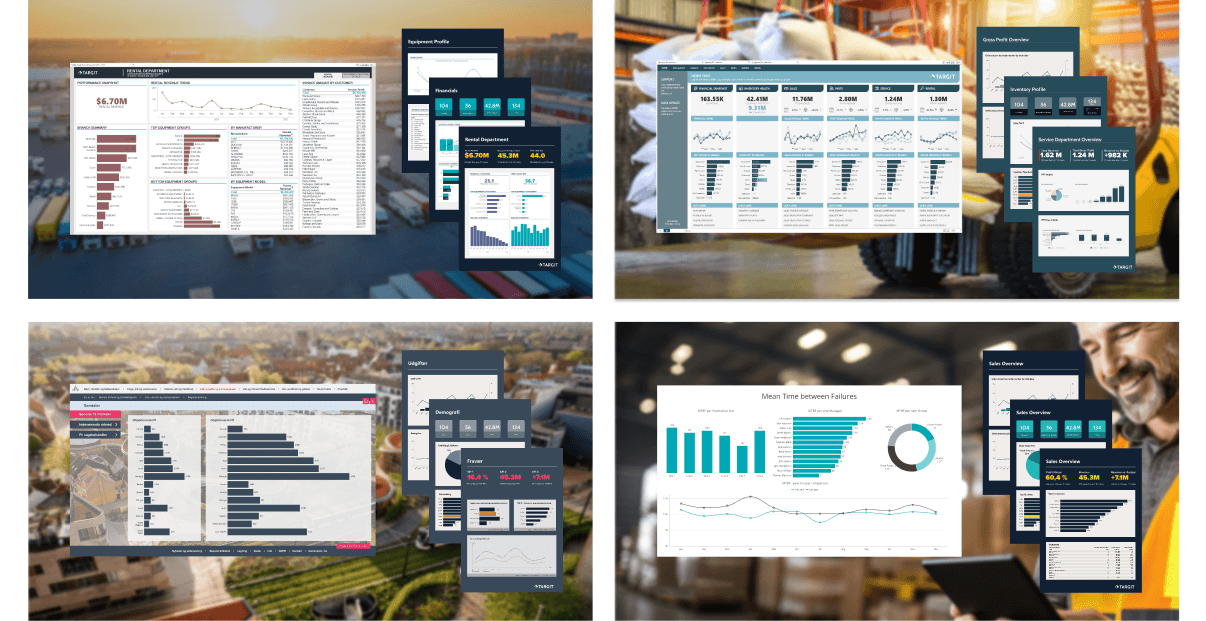
By offering pre-built dashboards, KPIs, and data integrations, these solutions equip their users with relevant, up-to-date information right out of the box.
This article explores why industry-specific BI outperforms one-size-fits-all analytics, how it shapes decision-making, and why organizations that adopt a tailored approach see tangible results in efficiency, growth, and profitability.
Limitations of One-Size-Fits-All Analytics Tools
 May not be able to connect to all your data sources Require extensive customization to fit your business needs Take considerable time, effort, and budget to fully implement Force you to build out most reports and dashboards from scratch
At first, a universal BI platform sounds appealing. It’s promoted as a tool that’s basic enough to work for anyone and can theoretically adapt to meet a wide range of business needs.
However, this perceived adaptability comes at a cost. When a company implements a generic BI and analytics tool, they’ll inevitably spend a good amount of time and effort customizing that tool to fit their business. And even then, certain features still won’t fully align with how they operate.
For example, not every BI tool can connect to every data source. Some require custom data connectors and specific security features before a BI and reporting solution can access the data within them. Universal reporting tools might also lack certain customization options – such as the ability to combine data from an ERP or other system with information in an Excel spreadsheet.
Benefits of Industry-Specific Business Intelligence
According to BARC’s BI & Analytics Survey 26, customers who selected BI software for its predefined industry content reported the strongest business benefits compared to other buying criteria.
 Rapid Deployment and Rollout
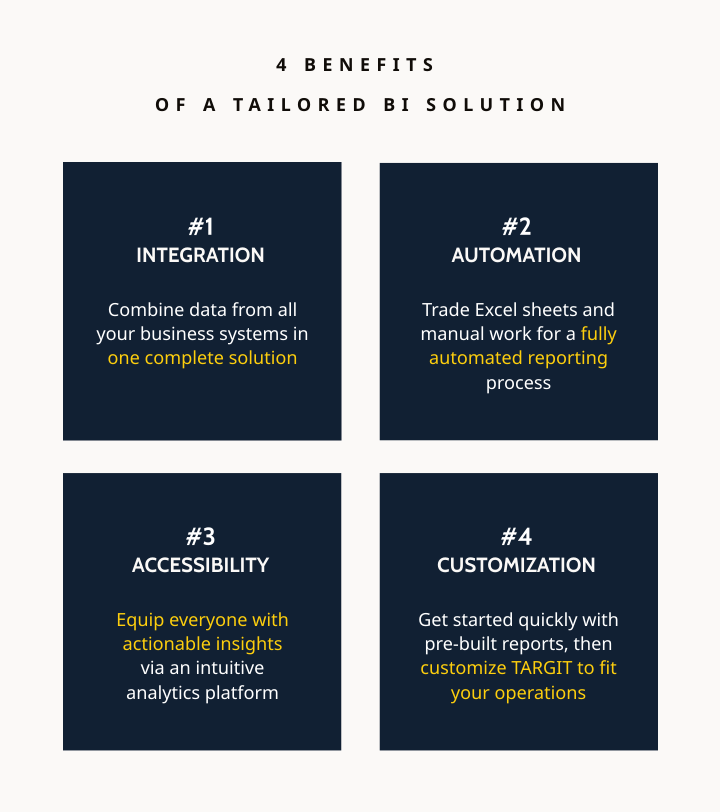
A pre-defined BI infrastructure simplifies data integration and setup, saving your team time and effort.
Minimal Risk and Internal Effort
Reduce risk and internal workload by leveraging a proven implementation framework.
Faster, More Accurate Reports
Turn manual work hours into a fully automated process that cuts report prep time and reduces human error.
Insights Tailored to Your Business
Access pre-built dashboards, KPIs, and metrics designed for your specific industry – ready to use right out of the box.
Enhanced Adoption
Self-service analytics tools and read-only dashboards empower business users across multiple locations and roles.
How TARGIT Customers
Benefit From Specialized BI Solutions:
“TARGIT’s presentation was geared toward heavy equipment,
and all our stakeholders agreed this was important...
-they have made a great commitment to our industry.
Their dedication to evolving along with us
makes them the premier solution for dealers.”
- ANDREW CASON, KIRBY-SMITH

“TARGIT knows the language dealers speak!
This allowed us to quickly move through onboarding
and begin to reap value from the data.”
- MIKE SOLEY JR., MILLER-BRADFORD & RISBERG
“The fact that TARGIT knows our business,
our industry, how we operate,
and the culture of our company is critical.
The trusted advisor role that TARGIT plays
has become criticalin the success of our BI operations
and our business as a whole.”
- DALYS JOHNSON, BLANCHARD MACHINERY
“TARGIT's complete understanding of agriculture
and heavy equipment industry metrics
has been a game changer in our Kubota dealership.”
- JOEY MCCLINTON, PARISH TRACTOR COMPANY
“A big reason we chose TARGIT
was their existing connection to the IntelliDealer DMS
and their experience in the heavy equipment industry.”
- CAO, DOGGETT EQUIPMENT SERVICES GROUP
Industry-Specific BI vs. Universal Analytics Tools
Industry-specific solutions are designed to address the unique processes, KPIs, and challenges of a particular sector. Universal analytics tools, on the other hand, provide broad flexibility across industries but may require more customization to deliver actionable, context-specific intelligence.
The choice between these approaches can determine how effectively teams can access data, make decisions, and drive business outcomes. The chart below highlights the key differences to help you understand the potential impact of each.
|
Industry-Specific BI |
Vs.
|
Universal Analytics Tools |
|
Seamless, pre-established connections with industry-standard systems |
Integration Capabilities |
Often require complex integration or manual data exports |
|
Accelerated via a proven framework, expert-led setup, and ready-to-use BI assets |
Setup Time & Effort |
Can take months or even years to fully configure, leading to surprise costs and/or project delays |
|
Pre-built, tailored to industry |
Reports & Dashboards |
Generic, require customization |
|
Tailored to users’ roles and level of tech expertise |
User Experience |
Best for technical users; extensive training required |
|
Realized in just a few days; quantifiable via KPI tracking and BI usage reports |
Time-to-Value |
May take months to realize; difficult to quantify compared to internal investments in rollout |
Practical Considerations for Selecting a BI Solution
 Performance and Scalability
Ensure the new solution can process large volumes of data quickly. A centralized data warehouse helps maintain consistent, accurate reporting as your organization grows.
User Accessibility
Different roles need various levels of access and training to use BI successfully. Look for a user-friendly platform that supports multiple user types and offers hands-on training to support rollout.
Data Integration
Your BI solution should integrate smoothly with existing ERP, DMS, CRM, and other operational tools to offer a unified view of all business data.
Mobile and Remote Access
Enable employees to access dashboards and reports from anywhere, whether they’re working in an office, on the front lines, or on-the-go with their cell phones.
Automation and Alerts
Automated reporting, interactive dashboards, and scheduled alerts reduce manual effort and help teams act quickly and effectively.
Security and Governance
Role-based permissions and robust security features protect sensitive data while allowing authorized users easy access, balancing safety and usability.
Industry Expertise and Support
Look for a BI partner that provides pre-built analytics tailored to your specific industry. This ensures the platform will support your operational needs, deliver ROI quickly, and help you track highly relevant metrics across every part of your business.
Drive Measurable Value with Industry-Specific BI
Choosing the right business intelligence solution is not just about features or flexibility; it’s about impact.
Industry-specific BI empowers organizations to act faster, increase user adoption, and leverage tailored insights to drive decisions that deliver measurable business value.
TARGIT offers specialized BI solutions that combine pre-built dashboards, KPIs, and integrations designed for your industry, helping teams move from data to action with confidence and speed.
Explore how TARGIT’s vertical-specific BI solutions and BI accelerators can transform your reporting.
TARGIT solutions by industry • TARGIT pre-built BI accelerators


/Forterro_Arrow-On-Colour.svg)
